GLOW Reconstitution & Dosage Calculator
A pre-mixed three-peptide blend (GHK-Cu, TB-500, BPC-157) studied for skin elasticity, collagen synthesis, and tissue regeneration.
Reconstitute
Just the math. Nothing saved.
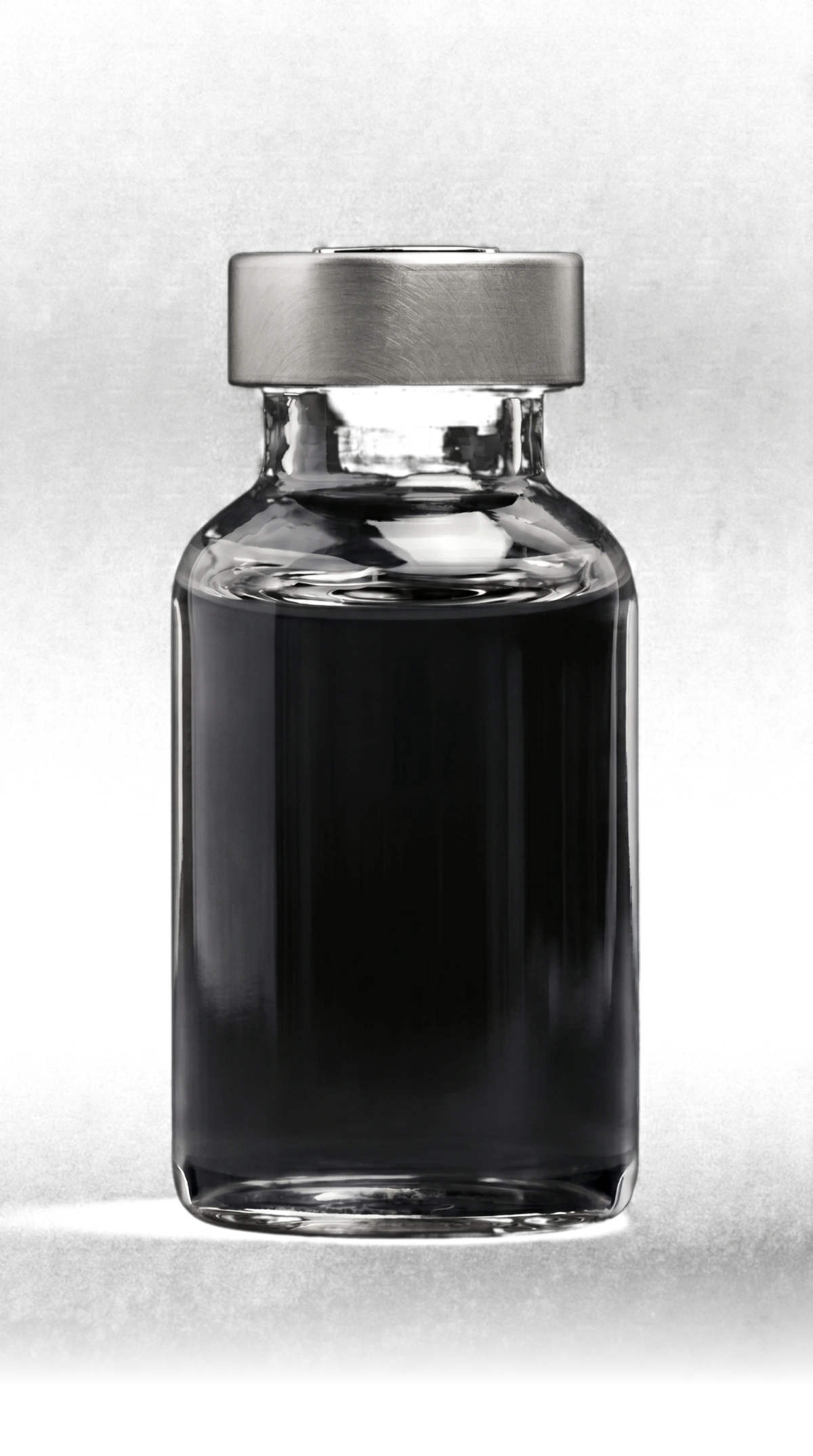
Seal it in your vault
Injection complete. Secure your vial.
Press & hold to seal
Research use only. Not medical advice. Not for human consumption.
How to reconstitute GLOW
GLOW reconstitutes to a set concentration. Add 7 mL of bacteriostatic water to a 70 mg vial for a 10 mg/mL solution.
Mixing is one decision: how much bacteriostatic water goes in. Dosing follows from it, and the syringe reads the result. The instructions below are the whole procedure.
| Vial size | BAC water | Concentration | 3.5 mg draws to |
|---|---|---|---|
| 50 mg | 5 mL | 10 mg/mL | 35 units |
| 70 mg | 7 mL | 10 mg/mL | 35 units |
Units are shown for a U-100 insulin syringe. A common starting dose is 3.5 mg. At 14.29 mg/mL, that draws to 24.5 units on a U-100 insulin syringe.
How GLOW works
GHK-Cu signals collagen synthesis at the gene level while TB-500 drives cell migration and vascular repair and BPC-157 amplifies soft-tissue healing. The three act across complementary repair pathways.
Reported side effects
- Injection site irritation
- Slow visible results
- Limited response in pre-existing connective tissue conditions
When is GLOW taken?
GLOW is commonly taken morning and evening.
Reconstituting GLOW, step by step
Reconstituting is the mixing step: bacteriostatic water goes into the vial of lyophilized powder, and the powder becomes a solution a syringe can measure. For a 70 mg vial of GLOW the calculator's water volume is 7 mL, which gives 10 mg/mL. The technique is the same for every peptide; only the water volume changes.
- Prep. Remove the plastic caps from the GLOW vial and the bacteriostatic water vial. Wipe both rubber stoppers with an alcohol pad and let them air dry for about ten seconds.
- Equalize the pressure. Pull 7 mL of air into the mixing syringe and push it into the water vial. The positive pressure makes the draw easier.
- Draw the water. Turn the water vial upside down and draw 7 mL.
- Inject down the glass. Put the needle through the center of the GLOW stopper, aim the tip at the inside wall, and press slowly so the water runs down the glass instead of hitting the powder. Peptides are fragile chains, and a jet of water straight onto the powder can damage them.
- Swirl, never shake. Withdraw the syringe and roll the vial in slow circles until the solution is clear.
The reasoning behind each step is in the guide Peptide reconstitution is one number. Bacteriostatic water, not sterile water, is what makes a multi-draw vial possible; the difference, and the 28-day question, is in bacteriostatic vs sterile water.
Dilution: the water volume sets the units
Two numbers decide everything on the syringe. Concentration is the vial's mg divided by the water added, and the draw is the dose divided by that concentration, read as units on a U-100 insulin syringe, where 1 mL is 100 units. Diluting a vial with more water does not change the amount of GLOW in it; it spreads the same 70 mg across more liquid, so every dose becomes a larger draw. Less water does the opposite.
| Water added to 70 mg | Concentration | 3.5 mg draws to |
|---|---|---|
| 3.5 mL | 20 mg/mL | 17.5 units |
| 7 mL (the standard) | 10 mg/mL | 35 units |
The standard row is what the calculator uses for this vial. The other rows show the arithmetic, not a recommendation. The dose is entered in the calculator, never read off a table.
How many vials a 10 mL bottle of bacteriostatic water mixes
Bacteriostatic water is sold in 10 mL and 30 mL bottles. At 7 mL per 70 mg vial of GLOW, a 10 mL bottle reconstitutes 1 vial with 3 mL left over, and a 30 mL bottle reconstitutes 4. The 0.9% benzyl alcohol preservative is what lets one bottle serve several vials over several weeks. What a milligram costs right now across the stores TR8CE tracks is on the peptide price index.
| Vial size | Water per vial | Vials per 10 mL bottle | Vials per 30 mL bottle |
|---|---|---|---|
| 50 mg | 5 mL | 2 | 6 |
| 70 mg | 7 mL | 1 | 4 |
GLOW in units on a U-100 syringe
At 10 mg/mL, every 1 mg is 10 units. The rows below are the conversion at the calculator's standard concentration, up to one full 100-unit syringe. A vial size not listed follows the same rule: water equals size divided by 10.
| Amount of GLOW | U-100 syringe |
|---|---|
| 1 mg | 10 units |
| 2 mg | 20 units |
| 2.5 mg | 25 units |
| 3.5 mg (the COMMON reference) | 35 units |
| 5 mg | 50 units |
| 10 mg | 100 units |
Storage after reconstituting
Once mixed, a GLOW vial is kept refrigerated at 36 to 46 °F (2 to 8 °C) and is not frozen. TR8CE's vault uses a common 28-day refrigerated use-by window as general research guidance, not medical advice. Most peptides reconstitute clear, and a solution that stays cloudy or shows particles after a few minutes of gentle swirling may be degraded or low purity, which is exactly the question a certificate of analysis answers before the vial is ever opened.
Frequently asked
How much bacteriostatic water do I add to GLOW?
Add 7 mL of bacteriostatic water to a 70 mg GLOW vial for a 10 mg/mL solution.
What is a common GLOW dose?
A common GLOW starting dose is 3.5 mg, which at 10 mg/mL draws to 35 units on a U-100 insulin syringe.
How do you reconstitute GLOW?
Draw bacteriostatic water into a syringe, inject it slowly down the inside glass of the GLOW vial (not onto the powder), and swirl gently until clear. Store refrigerated and use within the common window.
How do you reconstitute a 50 mg GLOW vial?
Add 5 mL of bacteriostatic water to a 50 mg GLOW vial for a 10 mg/mL solution. A 3.5 mg dose then draws to 35 units on a U-100 insulin syringe.
How do you reconstitute a 70 mg GLOW vial?
Add 7 mL of bacteriostatic water to a 70 mg GLOW vial for a 10 mg/mL solution. A 3.5 mg dose then draws to 35 units on a U-100 insulin syringe.
How many vials of GLOW does a 10 mL bottle of bacteriostatic water reconstitute?
At 7 mL per 70 mg vial, a 10 mL bottle of bacteriostatic water reconstitutes 1 vial, and a 30 mL bottle reconstitutes 4.
What happens if you add more water when reconstituting GLOW?
The amount of GLOW in the vial does not change; the concentration falls and each dose becomes a larger draw. 70 mg in 7 mL is 10 mg/mL, so 3.5 mg draws to 35 units; in 3.5 mL it would be 20 mg/mL and the same 3.5 mg would draw to 17.5 units.
How is reconstituted GLOW stored?
Refrigerated at 36 to 46 °F (2 to 8 °C), never frozen, with a common 28-day refrigerated use-by window as general research guidance, not medical advice.
Related peptides
Know first.
New compounds on the shelf, new lab reads, and the numbers behind them. One email when it matters, from tim@tr8ce.app.
Unsubscribe in one tap, every time. Research use only.